.png)
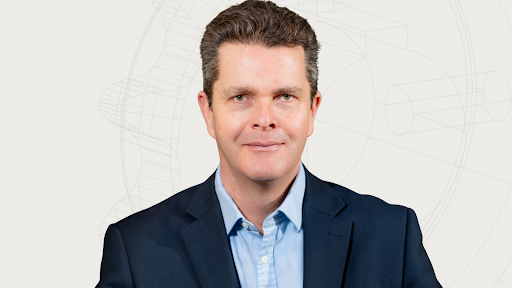
In this Telescope LENS Q&A, we talk with David Winickoff, Head of the Responsible Innovation Unit at the Organization for Economic Cooperation and Development (OECD). From his perspective bridging academic expertise with international policy development, David shares insights on how to realize the enormous potential of emerging technologies while managing risks—and why anticipating technological change, rather than reacting to it, is key to building a better future.
I lead the secretariat on responsible innovation in biotechnology, neurotechnology, nanotechnology and converging technologies at the OECD. OECD is a 38-member international organization devoted to developing policies on a range of topics from environment to health to industry. Technology and science is one of the main areas that the OECD works on.
Countries get together working with the Secretariat on research, on convening, on the development of standards. In my job, I do all of that. I lead a research team. I bring our member countries together to work on areas of joint interest in technology policy. We develop international standards and policy recommendations around these emerging and converging technologies.
I'm also currently a professor of law by affiliation at Sciences Po in Paris. Before that, I was a tenured professor at UC Berkeley. One of the things that I'm really interested in is how to bring the best kind of academic work and expertise to bear on the world of policy and technology policy.
One of the great challenges and opportunities for this work on technology policy—and one of the core ideas that motivates my work—is how to move across a foundation of principles and high-level norms, but then attach that to real actors and real practices. That's where the rubber hits the road.
The idea that our norms and our standards must be implemented is one of the prevailing ideas at the moment, because there's a proliferation of principles and norms in AI and other areas. But how do we actually make a difference and have actors change their behavior?
Emerging technologies of all kinds present enormous opportunities, as we know, from AI to biotech and biomedicine to advanced materials. But they also present some real risks to privacy, to democracy—misinformation, misuse, environmental risks.
A core challenge is: how do you make sure that we realize the enormous potential benefits of technology while managing and mitigating the potential downsides? To the extent that we can develop tools, mechanisms and approaches for doing that, this can make an enormous difference and make for a better society.
Doing that is incredibly difficult. How do you, in the same motion, increase the benefits and realize benefits while managing risks? That's the space that I live in. That's one of the most challenging things that we have to face in the world right now. I think we see the stakes of that activity in AI particularly, but increasingly in biotech and some other areas.
One of the ways that at the OECD we're trying to address that challenge—how to realize the full potential of emerging technologies and innovation while managing risks—is to think about the capacities, analytical and political, that have to be enhanced in order to do that.
One of the ones that we're working on is the capacity to anticipate—to anticipate technological change, to anticipate the kinds of institutional structures that are going to be necessary. To anticipate, we have to think about methods, thinking about institutions, how to pool our forward-looking capacities around foresight, around technology assessment. How do we bring multiple perspectives on the future to bear, so that we're not always on the back foot on governing technology, but actually create structures that are forward-looking while still being agile and allowing innovation to move forward
In terms of technology policy today, the focus is on AI for obvious reasons. It's already a broadly disruptive force. It's already bringing large changes to our daily lives, our institutions, our workplace. But I think more attention might be paid to biotechnology—both potential benefits and the potential risks to be managed.
We see in particular the convergence of technologies—convergence of AI with biotechnology—bringing enormous potential benefits that we haven't even conceived of yet, to solve, for instance, the hardest problems around the etiology of disease, how diseases come into being, and how do we construct the right kinds of molecules and interventions that can address this.
I think we have at our fingertips a kind of key moment, potentially a turning point. We've seen certain advances that really will work toward this. An example was what the Nobel Prize was awarded for quite recently—the use of AI in modeling the folding of proteins.
There's an enormous array of potential applications at the convergence of AI and biotech that I think have the potential to revolutionize medicine. But that's been said before. So the proof is in the pudding. And one should also be wary of falling into the major hype patterns and cycles that are normal in the area of emerging tech.
It's clear from my work that one way towards creating greater impact in technology policy is to increase the collaboration between the private sector and the public sector—between companies and entrepreneurs and funders and policymakers of all kinds.
There are real opportunities if we do that for streamlining regulation so that it's effective but also innovation-friendly. Some of the best kinds of approaches to innovation policy come when there's an interaction, an iterative and experimental approach towards developing solutions.
Of course, there are challenges when we talk about the private sector working with the public sector. If it's too close and there's not a sense of a certain amount of arm's length or differentiation of role, that can be problematic. But on the other hand, we see in countries and in science and technology innovation systems where there's more interaction and more sensitivity to the needs and interests of business in government, we're seeing a higher rate of innovation—a higher rate as measured by startups, patenting activity, a number of indicators.
One of the people that I really admire in the area of emerging technology policy is someone called Erica Widegrin from an organization called Reimagine Europa. This organization is interested in overcoming polarization in European society—in terms of either being for biotechnology or against biotechnology. It tries to bridge that gap by understanding the role of narrative on both sides of an issue and trying to find common ways of talking about what the core issues are.
This kind of activity is, I think, especially important today because of extreme polarization. Some might say it's impossible to bridge these gaps. I think we can't be totally pessimistic about that. We have to think seriously about bridging gaps, which will require conversations and thinking about how to find common forms of evidence and evidence-based policy approaches.
One of the puzzles that comes up in our work is looking at how different regions are more innovative than others and the kinds of policies that might lead to that. I'm really curious about why Europe in general has been less innovative, as measured by the indicators we talk about—company formation, patterns, entrepreneurship, these sorts of things.
I would be interested in asking Erica how a more sociological approach to understanding publics and attitudes could be a key to unlocking a higher rate of innovation and entrepreneurship in Europe. I think Europe's future and its role in the global system is incredibly important in terms of balancing how the global system operates. Understanding better, through sociology, the attitudes and potential to align greater interest in innovation would be important.
Solving the problem of good governance of technology will require mapping an ecosystem of actors across the public sector, the private sector, and the foundation or nonprofit sector. Within that ecosystem, we need to locate points of leverage—whether it's through individual actor motivations and incentives, or institutional structures, or norms and guidelines.
We need to do some thinking about where the highest leverage is within this ecosystem in order to better achieve the governance that we need.

In this Telescope LENS Q&A, we talk with David Winickoff, Head of the Responsible Innovation Unit at the Organization for Economic Cooperation and Development (OECD). From his perspective bridging academic expertise with international policy development, David shares insights on how to realize the enormous potential of emerging technologies while managing risks—and why anticipating technological change, rather than reacting to it, is key to building a better future.
.png)
In this Telescope LENS Q&A, we talk with Dr. Rumman Chowdhury, CEO and founder of Humane Intelligence Public Benefit Corporation and co-founder of the nonprofit Humane Intelligence. From her perspective as both a social scientist and AI ethics pioneer, Rumman shares insights on bridging the gap between technology development and what people actually want to see in the world—and how everyday voices can shape the AI systems being built around us.
.png)
In this Telescope LENS Q&A, we talk with Erika Staël von Holstein, Co-Founder and Chief Executive of Re-Imagine Europa. Drawing from her expertise in neuroscience and narrative strategy, Erika shares insights on how our thinking patterns shape reality, why we need to listen to those we disagree with, and how AI can help us build wiser technology by understanding the limits of our own narratives.
.png)
In this Telescope LENS Q&A, we talk with Michelle Giuda, CEO of the Krach Institute for Tech Diplomacy at Purdue University. From her perspective as both a former student athlete and a leader in global technology policy, Michelle shares insights on how the United States and its allies can deliberately shape a future of freedom, prosperity, and security, powered by trusted technology and new models of collaboration.
.png)
In this Telescope LENS Q&A, we talk with Kristen Edgreen Kaufman, Senior Vice President of Global Impact Initiatives at the U.S. Council for International Business (USCIB). With extensive experience bridging global public policy and private sector interests, Kristen shares insights on fostering innovation ecosystems, building coalitions across political divides, and ensuring American competitiveness in emerging technologies.
.png)
In this Telescope LENS Q&A, we talk with Chris Massey, founder and CEO of The Brds Nst. Drawing from his diverse experience across government and private sector, Chris shares insights on demystifying government for entrepreneurs, the transformative potential of AI across healthcare and elder care, and how innovation can serve both security and prosperity when we all "row in the same direction."
.png)
In this Telescope LENS Q&A, we talk with Heather Panton, General Counsel at Labrys Technologies. A former national security lawyer in the UK government who transitioned to the startup space two years ago, Heather shares insights on building compliance into innovation from the ground up, bridging the gap between private sector innovation and government needs, and creating technology that serves the public good.